
Salkantay Mountain
\r\n\r\n
PARKSWATCH PERU, HISTORICAL SANCTUARY OF MACHU PICCHU – CUSCO
DS No. 001-81-AA, January 1981.
The Sanctuary encompasses 32,592 hectares and an important occurrence of archaeological complexes and ecosystem diversity with endemic species and threatened fauna.
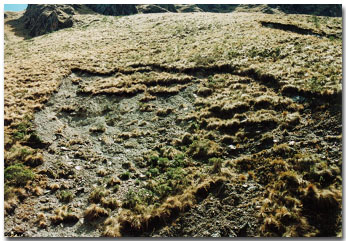
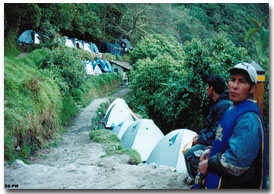
Beginning of soil loss and erosion process. Intense tourism on the Inca Trail.
Old vegetation fires, overgrazing and agriculture create landslides, soil loss and erosion, all processes of difficult restoration. While intense tourism is a latent threat, it is under control, managed by INRENA / INC, with an Incan trail apparently clean and well maintained. Other threats to the protected area are the increase of the urban zone, pollution, energy generating activities, farm animal husbandry, lack of inter-institutional coordination, political origin conflicts, and lack of local environmental awareness.
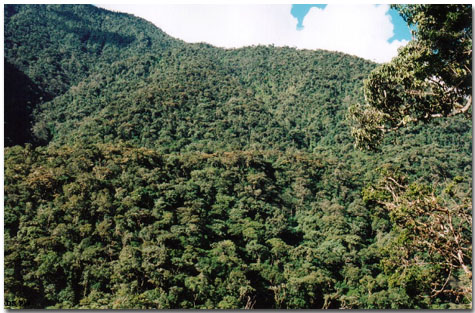
View of the western side of the Sanctuary, Aobamba River. Sharp slopes, tropical vegetation within a protected forest, extremely fragile terrain with great biological diversity and endemism conform this landscape.
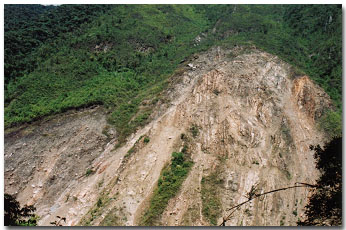
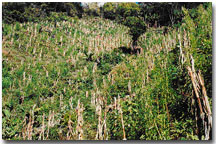
Landslide, vegetation and soil loss, erosion. Deforesttion due to higher number of chacras (cultivation plots).
There are about four or six families living within the Sanctuary on the Aobamba river portion. They practice small-scale farming activities of limited impact. But right across the river, within the buffer zone, there is a larger number of families who grow coffee, fruit trees and other products, constantly extending the agricultural frontier. EGEMSA, the electric company installed in the Sanctuary\’s interior, performs these types of activities broadly.
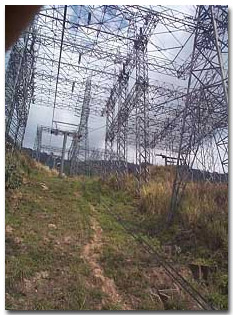
The presence of electric towers is a big visual impact, especially on the area of the Inca trail, a low valley parallel to the Urubamba River. Towers have been erected at the foothills and even near archaeological sites, upsetting the view and diminishing the quality of a tourist visit.
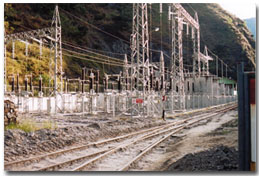
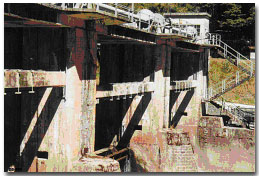
EGEMSA has built facilities for electricity production within the Sanctuary. These operations are carried out, in many cases, without proper negotiations with INRENA and against the management and administrative policies of the protected area. Currently the company wants to drain a high Andean lake, and according to reports from the local administration, they still don\’t have the appropriate impact studies and permits, but they have started the work.
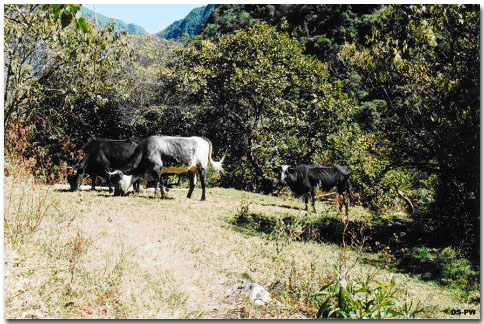
Cattle within the protected area. Not only cows, but also horses, mules, sheep and pigs. Due to ownership and length of settlement reasons, it is difficult to eradicate cattle ranchers from the interior of the protected area. In this context, the idea is to promote the replacement of these animals with others of lesser impact, such as lamas and alpacas.
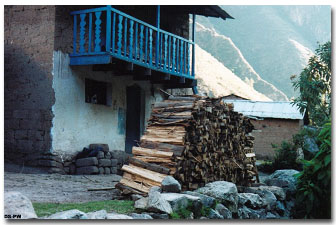
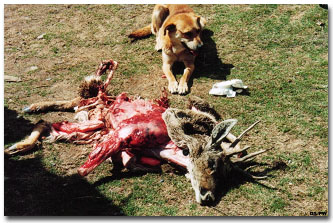
The extraction of firewood for family use and sometimes for commercial purposes affects the Sanctuary\’s vegetation. Occasional hunting affects wildlife, in particular the Peruvian guemal or taruka (Hippocamelus antisensis), a species threatened with extinction.\r\n\r\n
ParksWatch-Peru, July 2004