
Crater of El Nevado de Toluca National Park
Nevado de Toluca National Park is considered critically threatened, because currently it cannot guarantee the protection and maintenance of its biological diversity. During the recent work of a forum on this protected area, which took place in the Technological Institute of Toluca, ParksWatch was able to verify that fact, and learned the results and attended the presentations of authorities of the State of Mexico, like the Environment and Natural Resources Secretariat (SEMARNAT), the National Forestry Commission (CONAFOR), the Federal Procurator of Environmental Protection (PROFEPA), and the State Commission of Natural Parks and Fauna (CEPANAF).
The Nevado, established in 1936 with an area of 46,784 ha from its lower boundary at 3,000 meters above sea level, is currently entering a critical phase due to the serious threats that have been developing and growing larger every day since its creation. Among the threats most known by the authorities and general public are: illegal logging, soil degradation, property disputes, changing land uses, agriculture and ranching in areas with pronounced slopes and suitable for forestry uses, as well as the lack of trained field personnel for the management, monitoring, and conservation of the resources. Additionally, there is the destruction and theft of archaeological sites the mountain once had.
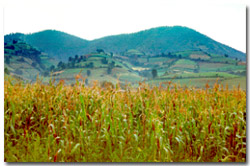
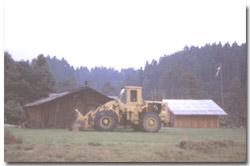
Advance of the agricultural frontier above the park boundary at 3,000 m (left) and the illegal establishment of settlements in forested areas.
Despite all of this, the institutions have not lowered their guard, and year by year take actions such as reforestation, monitoring wherever possible, and soil conservation, among the most important. However, threats such as logging for fire wood and coal have been so effective, that the impact of these efforts is difficult to quantify. Large-scale Illegal logging for roundwood is better organized. Even the local inhabitants often speak of the advantages of there not being permanent inspection posts in areas bordering the forest, besides being able to contact each other by cell phone, almost immediately, to warn of any inspectors in the area.
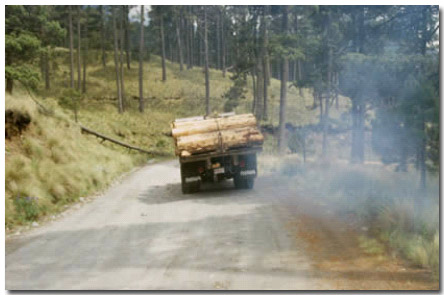
According to local inhabitants, programs of forest cleaning are carried out without the presence of forest rangers, during which diseased as well as healthy trees are removed.
As for forestry and deforestation, it is unacceptable that practices such as the harvesting of young saplings take place in communities like Zaragoza in the municipality of Calimaya; in Agua Amarga and Porfirio Díaz of Coatepec Harinas; in Totolmajac of Villa Guerrero; and in San Pedro Tlanixcose of Tenango Del Valle. This illegal timber is most frequently used for construction and as stakes for horticultural projects. At this rate of destruction, reforestation and soil conservation efforts undertaken by government agencies and the public at great human and economic cost, become practically worthless. Thus, forest restoration processes will never complete their cycle and forest will continue to be lost, while the uses of land for agriculture and ranching gain ground.
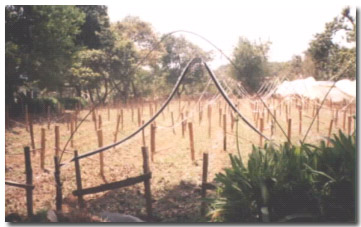
Photo © PROFEPA, 2005. Illegal activities, such as the harvesting of young saplings for use as stakes in horticultural projects, are prevalent.
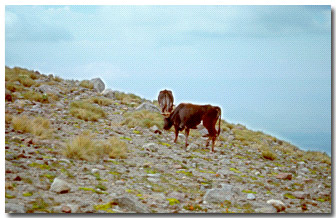
Not even the crater of El Nevado, at a height of more than 4,500 meters, is safe from grazing.
The limited technical capacity and reduced number of park rangers has made Nevado Del Toluca an easy target for anyone who intends to damage its biodiversity or cultural richness. Training is required for those people who attend to visitors in order to offer tourists as much information as possible, thus enabling them to truly understand the scope of what they are observing. The possibilities are vast, since one is able to explore so many interesting themes, such as vulcanology, the mountain’s archaeology, its biodiversity, and landscapes, among many others.
As we have seen, opportunities like ecotourism have been poorly understood or taken advantage of in a serious manner. This is a reflection of the complications that can arise when implementing projects in places where rural communities are immersed in a web of cultural problems and property disputes, where the declaration of National Park has been made on paper but now rings hollow, and lawlessness prevails.
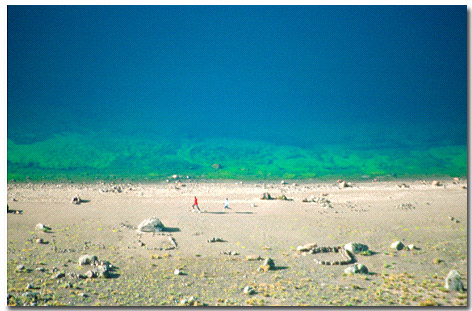
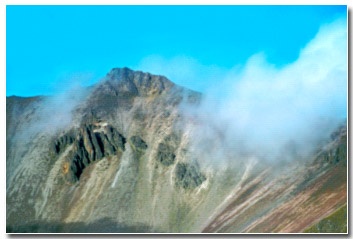
El Nevado represents an ideal site for highly challenging physical sports, such as mountaineering. These low environmental impacts only require some improvements in the park facilities and quality of services offered.
Currently, the Environment and Natural Resources Secretariat and the State Commission of Natural Parks and Fauna have proposed a reclassification of the park, with the goal of permitting the sustainable use and management of its natural resources. However, whatever the proposed category of protection, it will not guarantee that the forest will be well managed and conserved unless critical issues are addressed. The number of staff for monitoring and public attention should be increased and perfectly qualified for the job. Restoration and conservation programs should be promoted. The proliferation of sawmills and wood mills should be stopped, as there are already more than 100 in the areas surrounding the park. Likewise, environmental laws must be enforced, making an example of those who violate the laws and regulations. Clear examples of the prevailing lawlessness can be seen in the creation of new settlements in forested areas and in the illegal exploitation of mines within the boundary of the park. Incentives and support should be provided for research projects investigating key species such as the volcano rabbit (Romerolagus diazi), the monarch butterfly (Danaus plexippus) colonies, and, more importantly, the alpine grasslands of which little is known.
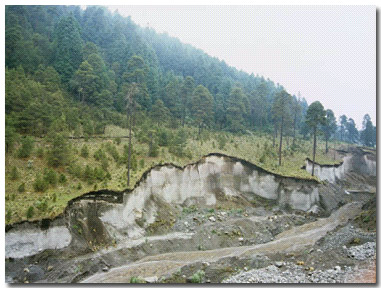
Natural resources are exploited from within the Park´s borders, as is shown in this photo of a mine.
We hope to increase awareness and want people to realize that, without taking profound actions prior to reclassification, we may only be accelerating even more the process of destruction. The State of Mexico and the federal government will have to give as much priority to the problems of Nevado de Toluca National Park, as they give to other natural areas, where the level of threat has prompted them to action. Among these are the Mariposa Monarca and Montes Azules Biosphere Reserves. It is no secret that the park provides various ecological services, such as water quality and climate regulation, which in turn directly promote economic development in the state, and to a lesser degree, that of the Federal District. The agriculture, farming, and industry sectors are some of the most favorably affected, aside from the park contribution to a better quality of life and social well being.
ParksWatch-Mexico: October 2005
Photos © Gerardo Carreón A.