
In addition to being an important refuge for flora and fauna, Avila is of great landscape value for the city of Caracas (photo © César Aponte)
The Avila mountains were declared a national park in 1958 in an effort to preserve the green space adjacent to Venezuela’s capital city, Caracas, and its metropolitan area. These green spaces function as moderators of environmental contamination, they are sources of potable water, and they are important recreational destinations for the city’s inhabitants as well as its visitors.
Recently, it was announced the borders of this important protected area might be modified—an announcement environmentalists view as a threat to the area’s conservation. The proposal to disaffect 3,500 ha of this national park was made public September 6th of this year by Arcitect Pietro Vallone, the President of the National Parks Institute (Inparques). Apparently, homes will be built on the land for people from the state of Vargas, a region that was affected by a landslide in 1999. According to Vallone, the project includes moving the park’s border from 120 m altitude to 240 m, excluding areas that “have no or very little environmental value, as well as those that have been invaded,” where “there are no forests, only grasses and much deterioration.” The proposal also includes integrating 7,500 ha along the Carmen de Uria sector, on the park’s eastern side, close to the Birongo population, to include environmentally important zones near Cueva Alfredo Natural Monument.
The environmentalists have taken a position on the issue and many organizations have declared their opposition, including groups like Tierra Viva, Vitalis, Federación de Organizaciones y Juntas Ambientalistas de Venezuela, Colegio de Ingenieros de Venezuela, university professors, ex-Inparques officials, and one ex-Ministry of Environment official, among others. There are many arguments presented against the disaffection proposal, namely that it is very hard to distinguish which areas have more environmental value and which have less. Deciding to disaffect an area because it has been degraded by human action is a weak criterion since degraded zones can be restored and are not just destined for further destruction and development. Furthermore, this planned change for the protected area’s borders will set a dangerous precedent when it comes to inhabitants and settlers in this and other national parks, as it could serve as an incentive for this type of settlement to push for disaffection of other occupied lands.
It is also feared that there will be uncontrolled sprawl and urban growth and that the new border will not be impenetrable to further encroachment. Considering that 30 thousand homes are planned for the 3,500 ha, the population of Vargas will be further concentrated. The fact that the state of Vargas has a narrow littoral stretch means that any intervention must be done with care, especially since the area’s geological characteristics make the land unstable and will make providing potable water to any community above 120 m in altitude a very expensive undertaking. The zone’s geological vulnerability has been studied, and because of the 1999 landslide, three university students conducted studies for reconstructing the state taking its natural characteristics into account. The plans outlined in their studies were not implemented and they are now just sitting on shelves collecting dust.
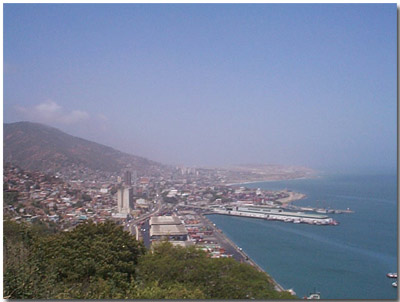
Unplanned homes are seen on the left side of the photo, along the borders of Avila that are being considered for modification (photo © César Aponte)
National parks were created to protect species and ecosystems, to safeguard important landscape resources as well as provide spaces for human recreation and amusement. They also guarantee sources of fresh water and prevent urban growth from advancing into unstable zones.
The President of Inparques resigned on September 12, maintaining his position that Avila’s disaffection and subsequent home building is a suitable solution to the residential problems in Vargas.
ParksWatch – Venezuela considers that this is an opportunity to discuss all available alternatives to resolve the residential problems without damaging Avila National Park, since it is an important reservoir of flora and fauna for all Venezuelans.
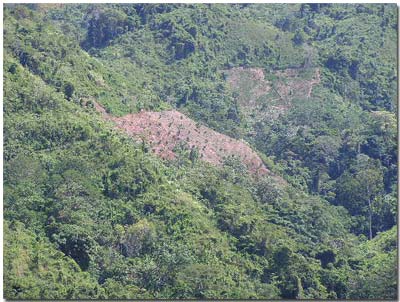
Human occupation and agricultural activities are significant in the area adjacent to Cueva Alfredo Jahn, which is the possible area of expansion for Avila National Park (photo © Rodolfo Castillo)
Inhabitants of Caracas and Vargas should ask themselves the following question: What would happen to the city’s climate, levels of pollution, and their recreational opportunities if Avila were not a natural protected area?
ParksWatch – Venezuela: October 2005