
During a month-long trek into Alto Purús National Park, ParksWatch uncovers
evidence of illegal activities that are threatening to destroy one of the
world\’s most pristine natural areas.
The park, located in the departments of Ucayali and Madre de Dios, covers 2,510,694.41 hectares. It was declared a national park on November 20, 2004 by Supreme Decree 040-2004-AG
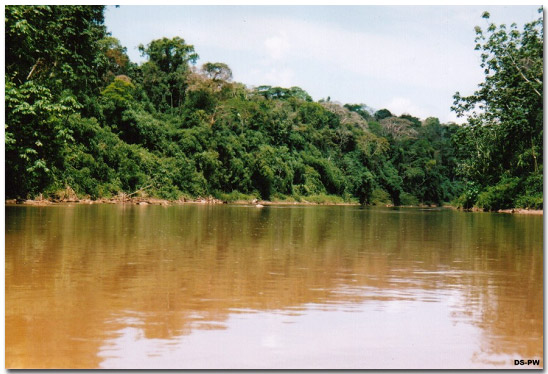
The park\’s overall objective is to conserve representative samples of humid tropical rainforest, its transitional life zones, and threatened and endemic flora and fauna.
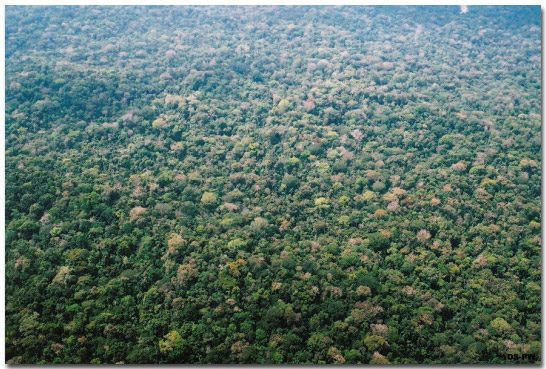
It protects the area inhabited by indigenous people in voluntary isolation. The park also conserves watercourses and the values and environmental services they provide. It preserves the region\’s landscape riches and beauty.
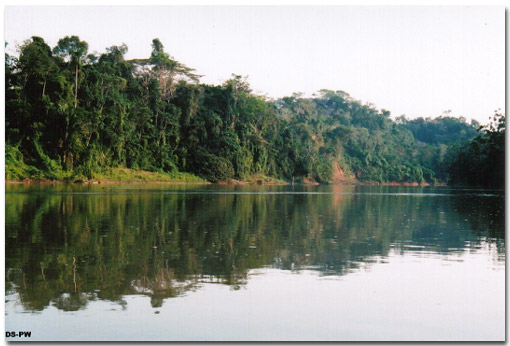
The reserve\’s overall objective is to conserve the area\’s biological diversity and promote sustainable management of its resources to benefit local communities in the surrounding areas.
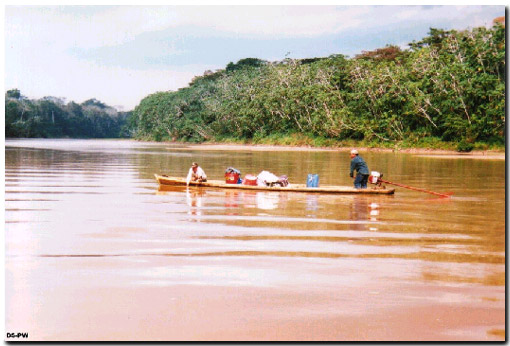
Purus Communal Reserve also intends to increase local management capacity, and intends to carry out conservation and management actions in harmony with surrounding communities.
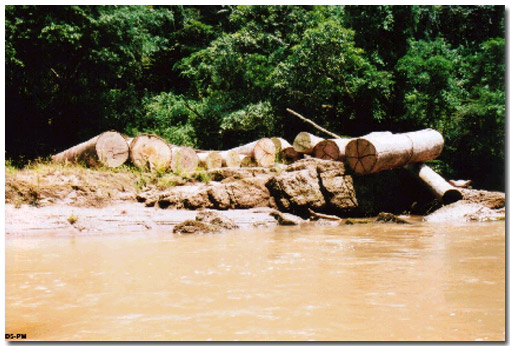
Illegal logging in the protected area\’s western sector. Neighboring concessionaries extract mahogany from the national park and they claim that it comes from their concession.
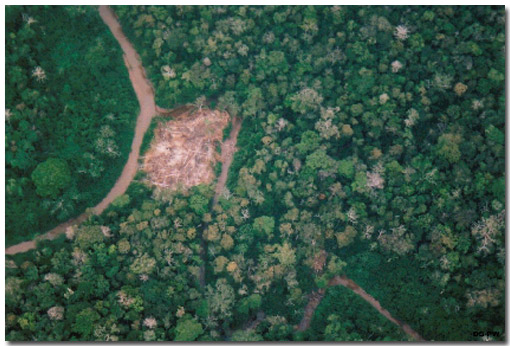
Aerial view of an illegal logger settlement within the park. Their center of operations where they extract timber is in the protected area. Fotos (c) ParksWatch.
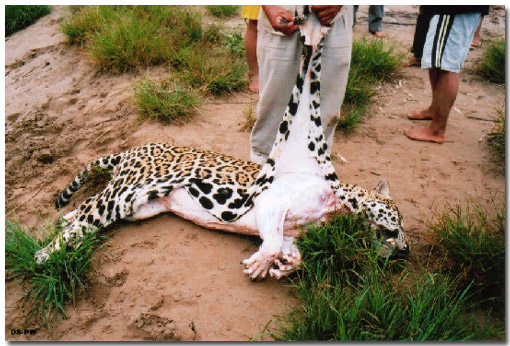
Mestizo businessmen from Puerto Esperanza enable native inhabitants by providing fuel and other goods so that they will hunt from within the protected area and then provide the businessmen with the meat and animal skins for later sale.
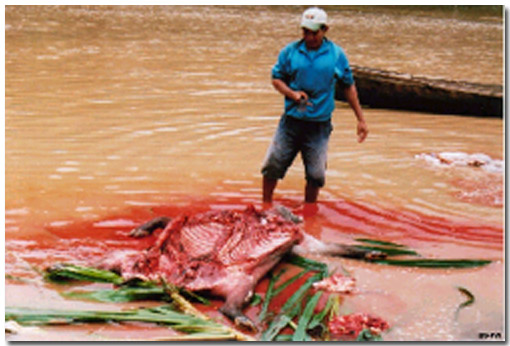
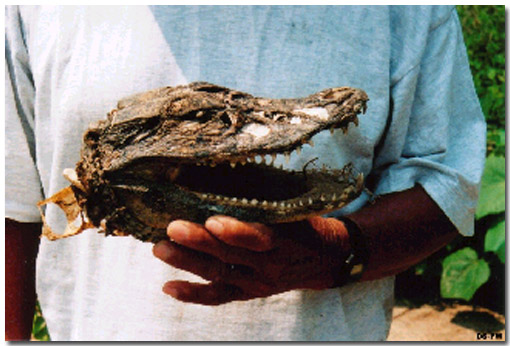
Traditionally, native inhabitants have hunted for subsistence to cover their dietary needs. However, these businessmen provide incentives for unsustainable hunting, even creating incentives for slaughter of threatened and endangered species. During visits to the communities, a large quantity of jaguar skins for future sale were observed. Even though this is illegal, there is a large black market for jaguar skins in Pucallpa and other areas.
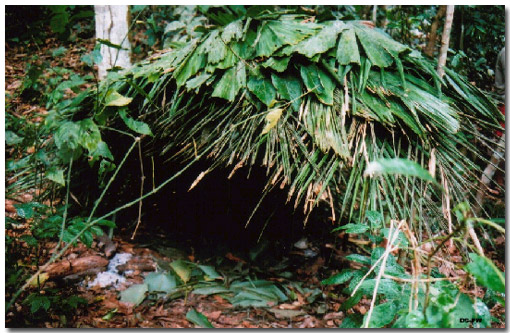
This refuge, with campfire, is irrefutable proof of the indigenous people in voluntary isolation along the Cujar River. As a national park, this area protects these nomadic populations. However, a territorial reserve lacks sufficient authority to do the same. The legal norm creating the national park takes these people\’s protection into account.
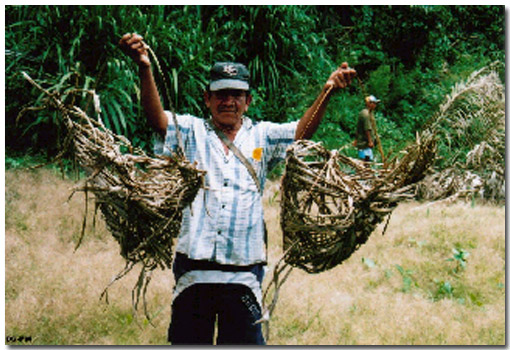
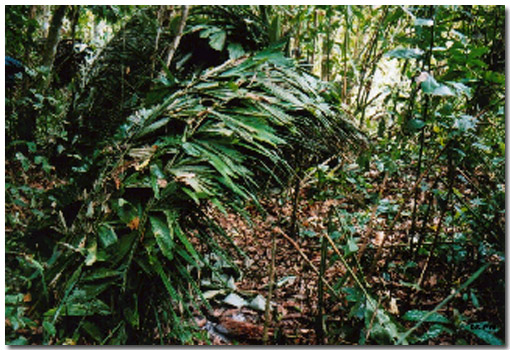
These are baskets used by indigenous people in isolation, and more refuges within the forest. Photos (c) Diego Shoobridge, ParksWatch.
Instead of risking a chance meeting with the indigenous people in voluntary isolation, we decided to turn around. Instead of crossing the Cujar River and traveling on to the Sepahua River as we had planned to investigate illegal timber extraction, we turned back out of respect for these people and their choice to live in isolation, out of respect for the protected area\’s regulations, and for our own safety.
ParksWatch-Peru, January 2005